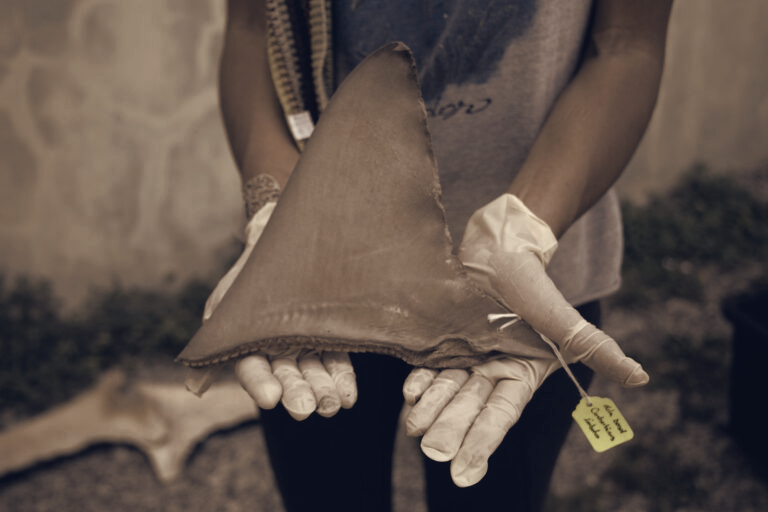
Local survival for sharks and rays improves where industrial crews actively free animals from nets and record where those encounters happen. Observers aboard the Promarina vessel Tabor witnessed that approach on a late April morning near Chepillo Island, when marine biologist Yehudi Rodríguez and sailor Joel Cordoba cut a sizeable black devil ray from a purse seine and sent it back to sea.
The Tabor, part of Promarina S.A., operates a fleet authorised to target small open‑ocean pelagic species such as sardines and herrings and processes fish into oil and meal. About a dozen sailors watched as Rodríguez, a professor of biology at the University of Panama and director of the Shark Defenders NGO, carried out a standard release routine that begins with recording the catch coordinates and inspecting any non‑target animals before release.
Rodríguez, 49, later described the moment, saying, "It’s an emotion to see a huge Mobula for the first time and liberate it in the ocean." The animal freed that morning was estimated to weigh 100 kilograms (220 pounds). A few hours on, Hermes, 18, the vessel’s youngest crew member who is nicknamed Mbappé, helped with a second release. Both handlers worked deliberately to avoid the ray’s venomous barb as they disentangled it.
Crews turned the rescues into routine activity rather than treating them as emergencies, with sailors trading light comments while they worked. Rodríguez visits Promarina vessels about every two weeks to examine bycatch and to release sharks, rays and other non‑target species, a cadence that the company has incorporated into its operations.
The twice‑monthly presence of an academic researcher and NGO representative, paired with consistent logging of encounter coordinates and animal condition, establishes an ongoing monitoring flow between researchers and industrial fishers. That repeatable record of bycatch locations offers a practical data stream that can be used to identify recurring entanglement areas and inform where protection or management measures may be needed next.