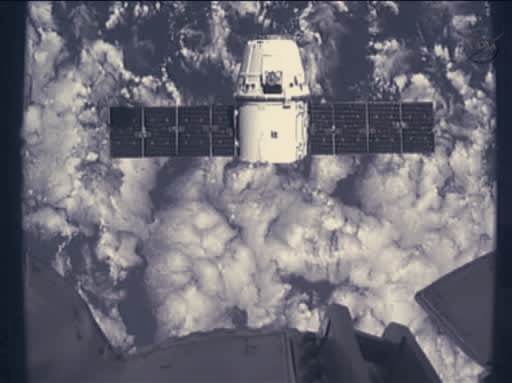

SpaceX has announced a late 2027 launch target for an orbital data center, a timetable that shifts the challenge from concept to immediate engineering and supply-chain delivery. The schedule creates a short runway for companies that must solve four central problems: cooling in vacuum, radiation tolerance, data downlinks to Earth, and reliable high-density power. Those constraints together determine whether a first launch becomes an operational asset or a costly demonstration.
Industry managers reacted with cautious skepticism. Evelyn Chow, portfolio manager at Neuberger, called the concept "a next-decade event." She added, "We'll need to see significant satellite launches over the next four to five years, and a concomitant buildout of connectivity, before we can start to contemplate true scale in orbital data centers," on Squawk Box Asia. Blaine Curcio, founder of Orbital Gateway Consulting, agreed the 2030s are a "fair assessment," while noting SpaceX has surprised experts before and recalling earlier sceptics who doubted the company could reach a massive satellite count.
Technical limits are immediate and practical. Chow warned that "Cooling is a huge issue," because vacuum conditions rule out many terrestrial liquid-cooling approaches and equipment must also survive radiation. Curcio flagged another barrier, rapid hardware turnover. "GPUs are evolving so quickly that if you launch a state-of-the-art data center into space, at an enormous cost, it might be obsolete in a couple of years," he said, underscoring the upgrade-cycle risk for expensive orbital payloads.
Communications capacity is the third bottleneck. Transcelestial, a laser-communications company, is developing high-capacity links intended to move large volumes of AI data down from orbit; without sustained, high-throughput connections, deployed compute cannot feed Earth-based workflows. Rohit Jha, CEO and Cofounder of Transcelestial, said, "Anyone can build data centers, but if you can't talk to these AI systems, then those data centers are useless." He added that moving from first deployments to hyperscale could take another five to seven years, and that such scale would likely require nuclear power in orbit to meet continuous energy demands.
The power question is the fourth constraint. Current solar and battery approaches may support prototypes, but industry specialists say they fall short of the sustained, dense power needed for large-scale AI workloads. That raises both engineering complexity and regulatory questions if operators pursue nuclear options.
Near term, the late-2027 milestone will function as a stress test for logistics, launch cadence and several unproven systems. Investors and operators will monitor satellite launch rates, laser-communication demonstrations, cooling and radiation mitigation approaches, and progress on compact, reliable power solutions. If those pieces do not converge, the consensus view holds that meaningful commercial scale for orbital data centers will remain a 2030s prospect rather than an immediate outcome of SpaceX’s target launch.