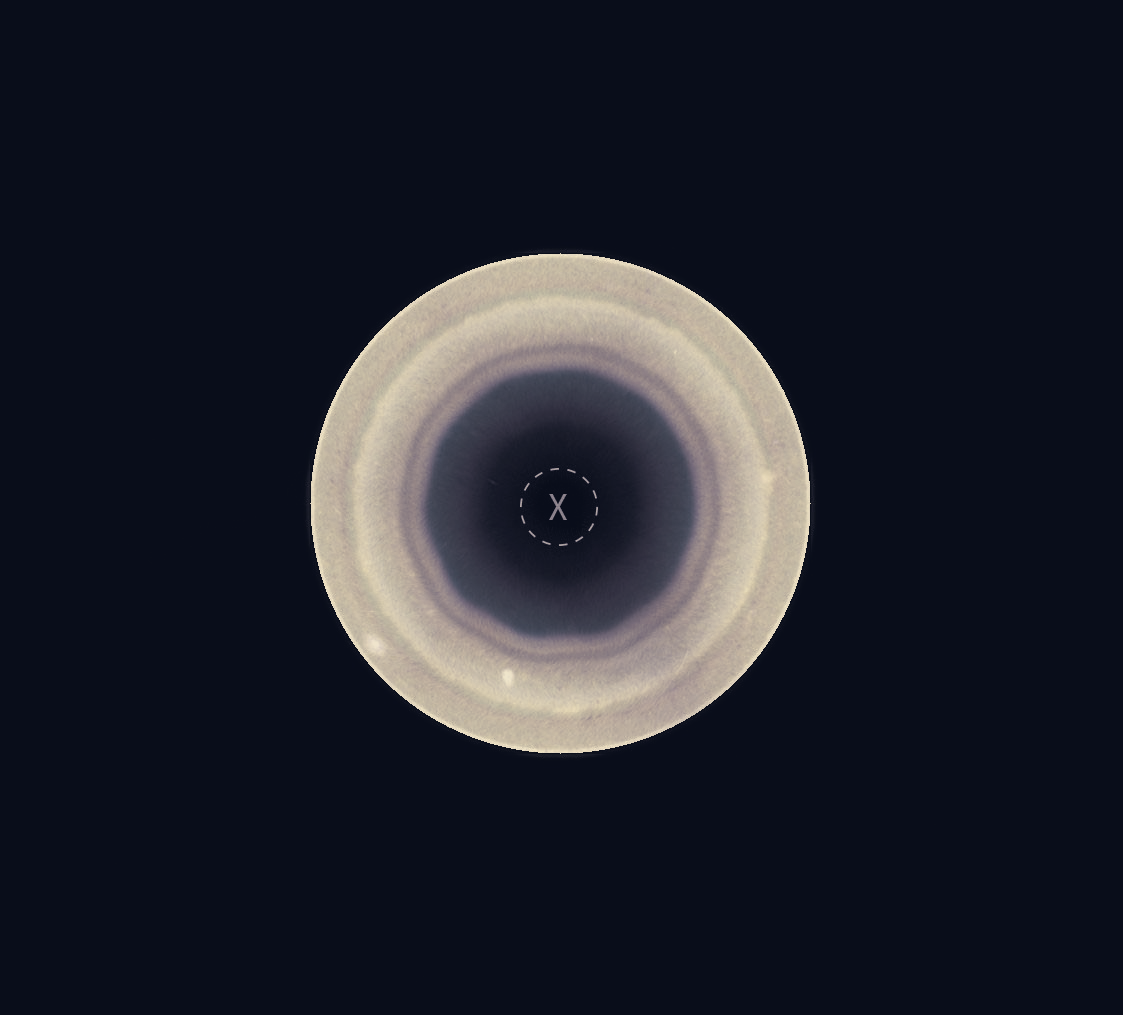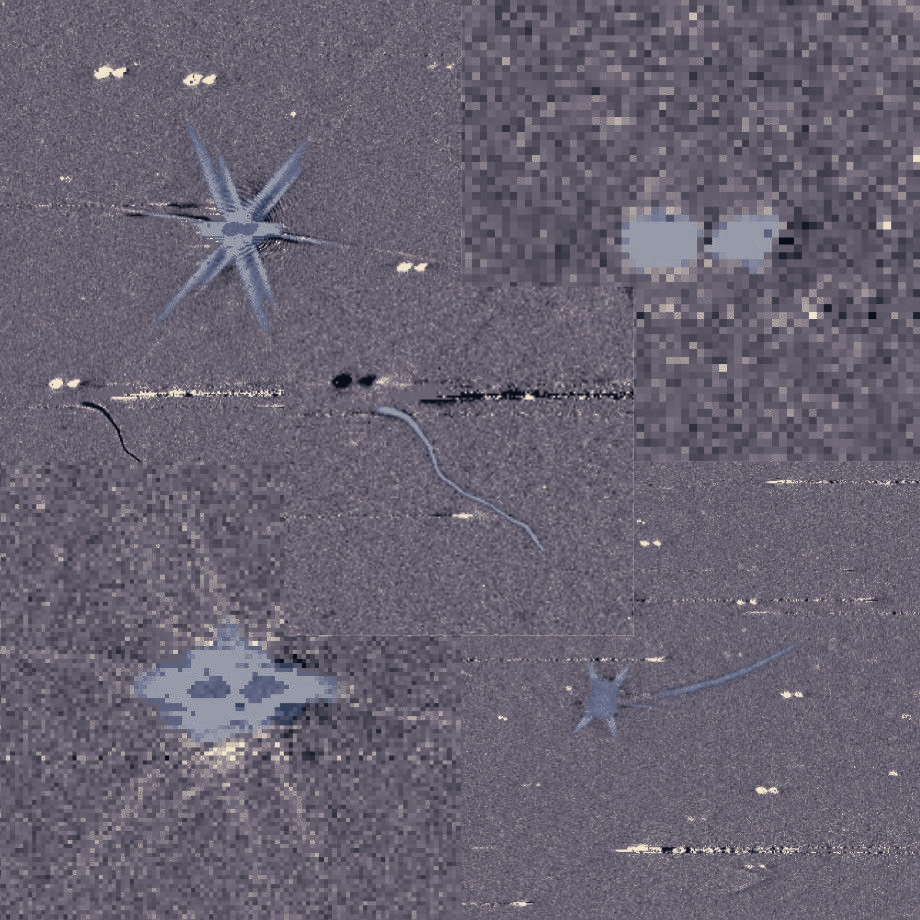

One of the two narrow rings around the small centaur Chariklo has become noticeably denser while its partner has all but disappeared, new observations from the James Webb Space Telescope show. The change was revealed when the team watched Chariklo pass in front of a background star and measured how the starlight dimmed, a technique that can detect faint material around distant minor planets.
Chariklo is tiny by planetary standards, barely 250 kilometers across, and its ring system upended assumptions when occultation measurements first revealed two distinct rings in 2013. “It was a surprise,” Pablo Santos-Sanz, an astronomer at the Instituto de Astrofísica de Andalucía in Granada, Spain, said of the original discovery. The new Webb data compare the current structure with those earlier occultation profiles and show clear changes in ring opacity and presence.
The team used a planned stellar occultation, predicting when Chariklo would cross a distant star and timing the brief dips in light. “We predict when a Solar System object passes in front of a star,” Santos-Sanz said. As the star blinks, observers can reconstruct the size, shape, and any surrounding material of the occulting body. Santos-Sanz added, “This is particularly challenging for minor bodies, and more challenging for distant minor bodies,” underscoring the observational difficulty of tracking such subtle features.
Researchers do not yet have an explanation for the diverging fates of the two rings. The observations sharpen longstanding questions about what composes these rings and how stable they are around a small, icy world. The contrast between a ring that has grown denser and one that has nearly vanished implies active processes altering ring mass or particle distribution on human-observable timescales.
The result demonstrates that stellar occultations, now including high-sensitivity platforms like Webb, can detect structural evolution in rings beyond the giant planets. The finding leaves open whether collisions, gravitational interactions, or other mechanisms drive the change and reinforces the need for repeated occultation monitoring to map how ring systems around minor bodies evolve.