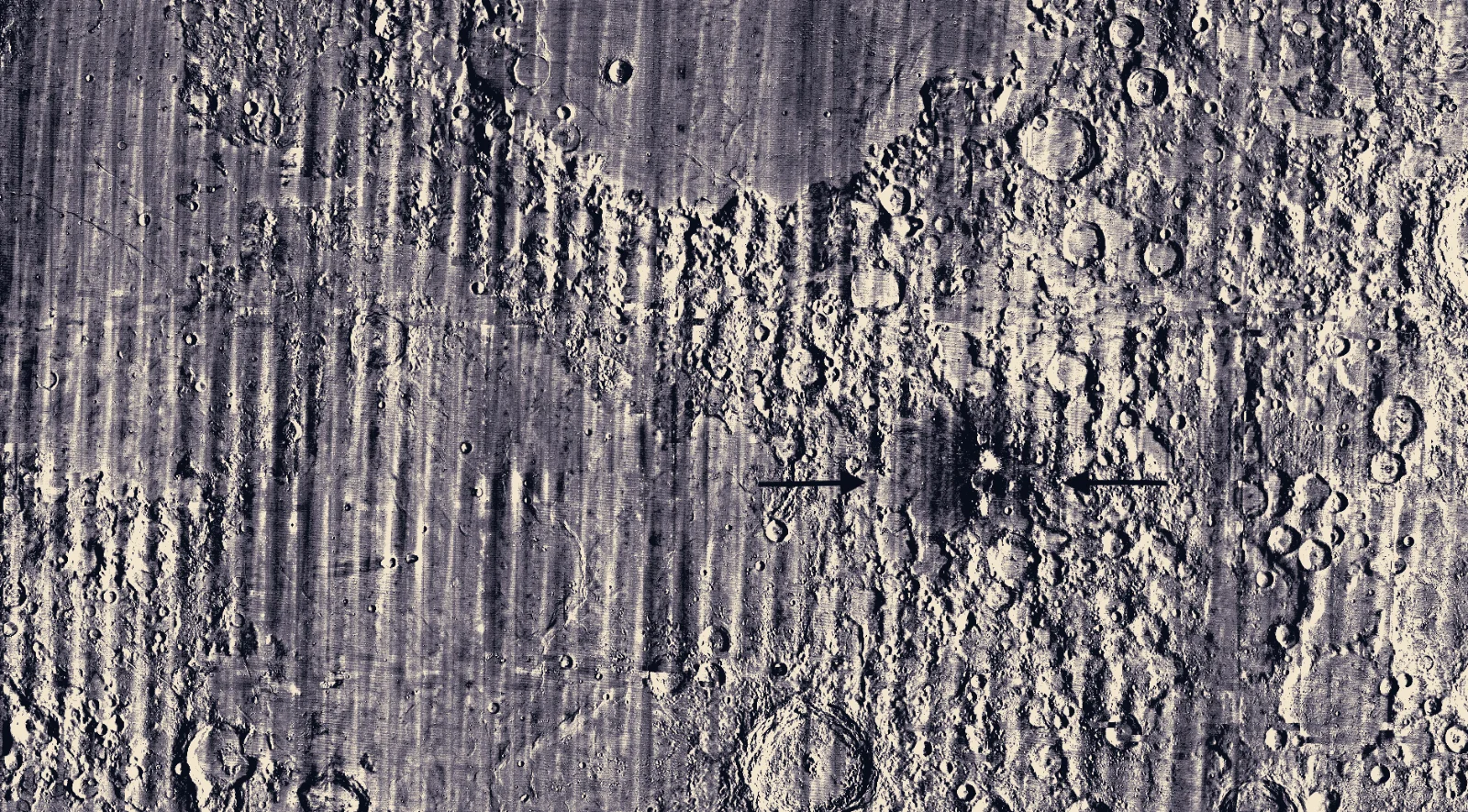
The main consequence is physical: a rare, large impact reshaped the lunar surface and its thermal behavior across miles. Analysts using data from NASA’s Lunar Reconnaissance Orbiter identified a new crater, officially named McGetchin, that formed on the Moon’s eastern limb between Apr. 11 and May 22, 2024. The hole measures 728 feet across and 141 feet deep, and researchers say the projectile was roughly the size of a three- to six-story building. Scientists described the event as an impact of roughly once-in-a-century magnitude in papers published in Science Advances on Sept. 15 and Sept. 16, 2026.
Robert Wagner, an image-processing specialist who works with the LROC system, first noticed an unusually bright spot encircled by a dark halo while scanning a large Moon map, saying, "I just stopped, dropped everything, and started looking into what that spot was." By comparing images taken several years apart, the team established that material had been excavated and redistributed across the surface. The newly exposed ejecta spans a distance large enough that the bright patch is visible in wide-angle mosaics made from LRO images.
Thermal observations from LRO’s Diviner instrument confirmed that the impact altered surface properties well beyond the crater rim. Post-impact Diviner data taken between Nov. 15, 2025, and Feb. 18, 2026, show a roughly 4-mile-wide area around McGetchin that is about 16 degrees Fahrenheit cooler at night than the surroundings. Researchers attribute the cooling to regolith that was loosened and made less dense by the impact, reducing its ability to retain heat. The Diviner team reported these thermal results in the Sept. 16, 2026 paper.
The finding underscores two operational points for future lunar activity. First, even absent an atmosphere, large impacts remain infrequent but consequential, and LRO has cataloged many smaller changes during its mission of more than 17 years, including at least 1,000 newly identified impact craters and about 100,000 flagged surface changes. Second, the thermal and mechanical alteration of the regolith around a fresh crater could affect how rover wheels, landers, or other surface hardware interact with the ground.
The results demonstrate the value of sustained, multi-instrument orbital monitoring as plans for an extended human and commercial presence on the Moon progress. Scientists released the detailed imaging and thermal analyses in Science Advances, and the LRO data provide a baseline for tracking future impacts and assessing their implications for science and exploration.